
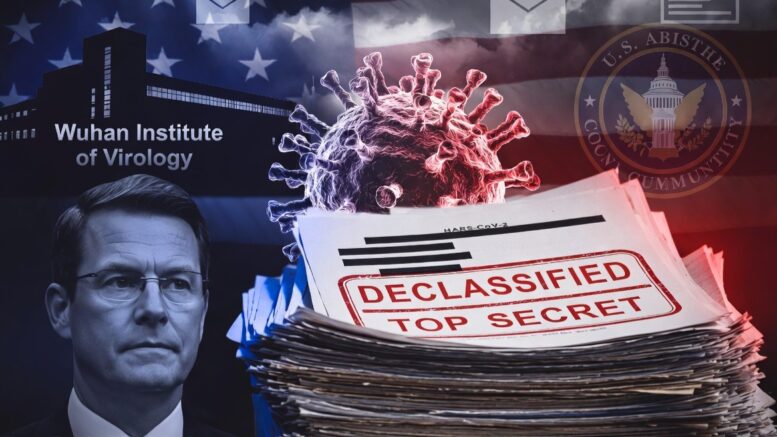
On June 18, 2026, in one of her final acts as Director of National Intelligence (DNI), Tulsi Gabbard released a trove of declassified intelligence community (IC) documents related to the origins of COVID-19. These materials, made public via the Office of the Director of National Intelligence (ODNI), include emails, briefing readouts, correspondence, and whistleblower complaints spanning key periods from 2020 onward.
Physician, scientist, and commentator Dr. Robert W. Malone, MD, quickly analyzed the release in a detailed X thread (and accompanying Substack post). He argues the documents reveal a “manufactured consensus” shaped by conflicts of interest involving Dr. Anthony Fauci, former director of the National Institute of Allergy and Infectious Diseases (NIAID). Malone frames the disclosures as confirming long-standing concerns about influence, suppressed dissent, and potential misrepresentation to Congress and the public.
Fauci’s Multiple Roles and Alleged Conflict of Interest
Malone’s thread opens with a core conflict: Fauci, as NIAID director, oversaw funding for coronavirus research at the Wuhan Institute of Virology (WIV) through the EcoHealth Alliance. He simultaneously advised on the pandemic response and influenced intelligence assessments of the virus’s origins, while publicly dismissing the lab-leak hypothesis as a conspiracy theory. The declassified materials reportedly show Fauci providing the IC with a list of recommended scientists to consult, many of whom had received NIAID funding. Critics, including Malone, describe this as creating a closed loop: the funder of relevant research helping select the experts whose input shaped the official assessment, which was then presented publicly as independent consensus.
The Proximal Origin Paper and Early Scientific Debate
A pivotal element is Fauci’s involvement in a February 2020 teleconference that led to the influential paper “The Proximal Origin of SARS-CoV-2,” published in Nature Medicine. The paper strongly argued against a lab origin and was widely cited to label lab-leak discussions as unfounded. Private communications among the authors (later revealed through other investigations) reportedly expressed concerns that certain virus features “(potentially) look engineered.” Malone and others note that the paper’s public conclusions contrasted with these internal doubts. Nature Medicine has not retracted it despite calls from some scientists and biosafety advocates.
Testimony Under Oath vs. Documented Briefings
The documents allegedly contradict Fauci’s 2024 congressional testimony. When asked whether he had discussed viral research or COVID origins with agencies such as the FBI, CIA, or DIA, Fauci reportedly replied, “not to my knowledge about COVID.” Declassified records include dated readouts of briefings involving Fauci, such as a June 2021 session, directly challenging that statement. Malone highlights this as evidence of potential false testimony.
Whistleblowers, Retaliation, and Shifting Intelligence Assessments
Analysts and contractors who raised concerns about a possible lab origin reportedly faced professional repercussions, including termination, pressure to align with prevailing views, and compromised anonymity. These allegations were referred to the Intelligence Community Inspector General. The thread notes that early IC assessments (e.g., the October 2021 ODNI/NIC report) leaned toward natural origin with low confidence for several agencies. Later shifts occurred: the FBI and Department of Energy assessed a lab origin as most likely (2023), and the CIA reached a lab-associated judgment (early 2025). Congressional reviews also supported lab-origin considerations.
CIA Whistleblower James Erdman’s Prior Testimony
Five weeks before Gabbard’s release, CIA officer James Erdman III, who led ODNI’s origins investigation, testified under oath before the Senate Homeland Security and Governmental Affairs Committee on May 13, 2026. His account detailed Fauci’s influence on expert selection, sidelining of lab-leak views, a contractor’s firing shortly after raising concerns, and alleged CIA obstruction of declassification and surveillance of investigators. Gabbard’s documents are described as corroborating many of Erdman’s claims (e.g., specific meetings and correspondence). Erdman’s testimony preceded the full document release, lending it independent weight in Malone’s analysis. Allegations of higher-level obstruction remain based on sworn testimony for now.
Key Takeaways from the Documents and Malone’s Thread
Malone emphasizes that the release provides primary-source materials, emails, briefing notes, and internal records, rather than curated summaries. Readers are encouraged to review them directly via ODNI channels and decide for themselves. The core thesis: Institutional conflicts of interest may have shaped how evidence was weighed and presented, turning what should have been an open scientific and intelligence inquiry into a more constrained process. The focus shifts from pure origins debate to questions of transparency, accountability, and the integrity of public health and intelligence institutions.
Broader Context and Ongoing Debate
The COVID-19 origins question remains contested. While the lab-leak hypothesis has gained significant traction among U.S. intelligence agencies and lawmakers in recent years, definitive proof of either natural spillover or a laboratory incident has not been universally accepted. Chinese authorities have restricted independent investigations, and both hypotheses continue to be studied. Fauci has maintained in prior statements and testimony that he followed the science available at the time and supported further investigation. No criminal charges have resulted from these specific disclosures as of the June 19, 2026, reporting.
Implications
The Gabbard release and related testimony renew calls for greater scrutiny of gain-of-function research funding, overseas biological laboratories, and government transparency. They also underscore the challenges of separating stakeholder interests from independent assessment in high-stakes public health crises. Dr. Malone concludes his thread by urging the public to examine the primary documents: “Read it, then decide who lied to you.” Full analysis and links appear in his Substack post “Manufactured Consensus.”
Primary Sources for Further Reading:
- ODNI declassified COVID-19 release materials (June 18, 2026, via dni.gov, including Document Index Parts 1–4 and related news releases).
- Senate Homeland Security and Governmental Affairs Committee hearing on James Erdman III testimony (May 13, 2026).
- Dr. Robert Malone’s full thread and analysis at malone.news.
This episode highlights the value of declassification efforts in illuminating complex historical events and the importance of independent verification of claims from all sides. Public access to primary records allows for ongoing informed debate.