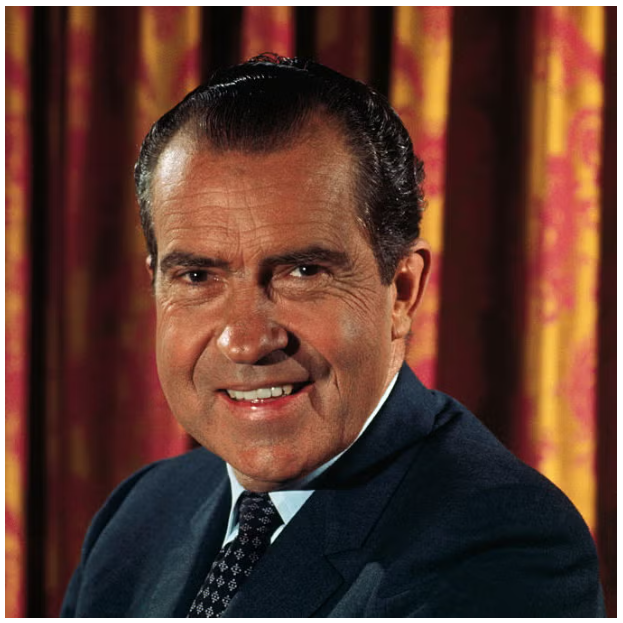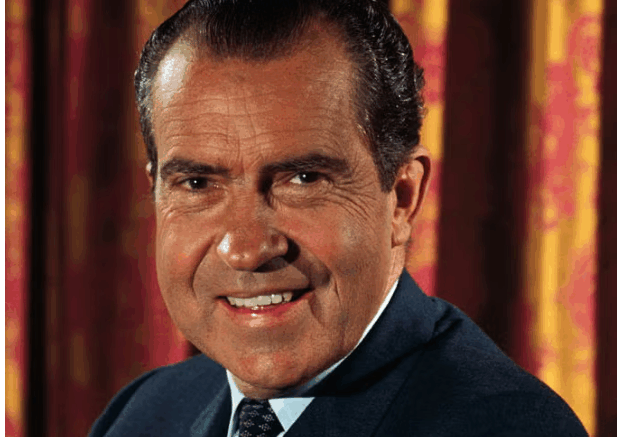
On the night of November 7, 1972, the map of the United States turned a shade of red rarely seen in American politics. Richard Milhous Nixon, the 37th President, had just secured one of the most lopsided victories in the nation’s history. Facing Senator George McGovern of South Dakota, Nixon carried 49 states, losing only Massachusetts and the District of Columbia. The Electoral College tally 520 to 17 stood as a testament to political dominance. Yet beneath the euphoria of victory lay the seeds of a scandal that would soon unravel the very administration celebrating its triumph.
Nixon’s campaign was built on law, order, and foreign policy. The campaign in 1972 was a masterclass in political positioning. Four years earlier, he had narrowly defeated Hubert Humphrey amid a nation fractured by Vietnam, civil rights unrest, and urban riots. By 1972, the landscape had shifted in his favor. The “silent majority” middle-class Americans weary of protest and upheaval rallied behind Nixon’s promises of stability.
His administration touted two major foreign policy achievements. The first was the ongoing withdrawal of U.S. troops from Vietnam, a process Nixon branded “Vietnamization.” Though the war dragged on, the draft had ended for most, and American casualties were declining. The second was a diplomatic coup: Nixon’s historic visit to China in February 1972, ending over two decades of isolation between the two nations. Broadcast live to millions, the image of Nixon toasting Mao Zedong shattered Cold War orthodoxy and burnished his image as a global statesman.
Meanwhile, McGovern’s campaign struggled to gain traction. A principled progressive, McGovern advocated immediate withdrawal from Vietnam, a guaranteed minimum income, and amnesty for draft evaders. To many voters, these positions appeared radical. Internal Democratic divisions, exacerbated by the chaotic 1972 Miami convention, where McGovern’s late acceptance speech aired after midnight further weakened his candidacy.
The Numbers Tell the Story:
- Popular Vote: Nixon 60.7% (47.2 million), McGovern 37.5% (29.2 million)
- Electoral Vote: Nixon 520, McGovern 17
- States Carried: Nixon 49, McGovern 1 (plus D.C.)
Nixon’s margin of victory in the popular vote of 23.2 percentage points ranks third in the 20th century, behind only Franklin Roosevelt in 1936 and Warren Harding in 1920.
In the Electoral College, only Ronald Reagan’s 1984 rout of Walter Mondale 525–13 would surpass it.