By I Bleed Red, White, and Blue
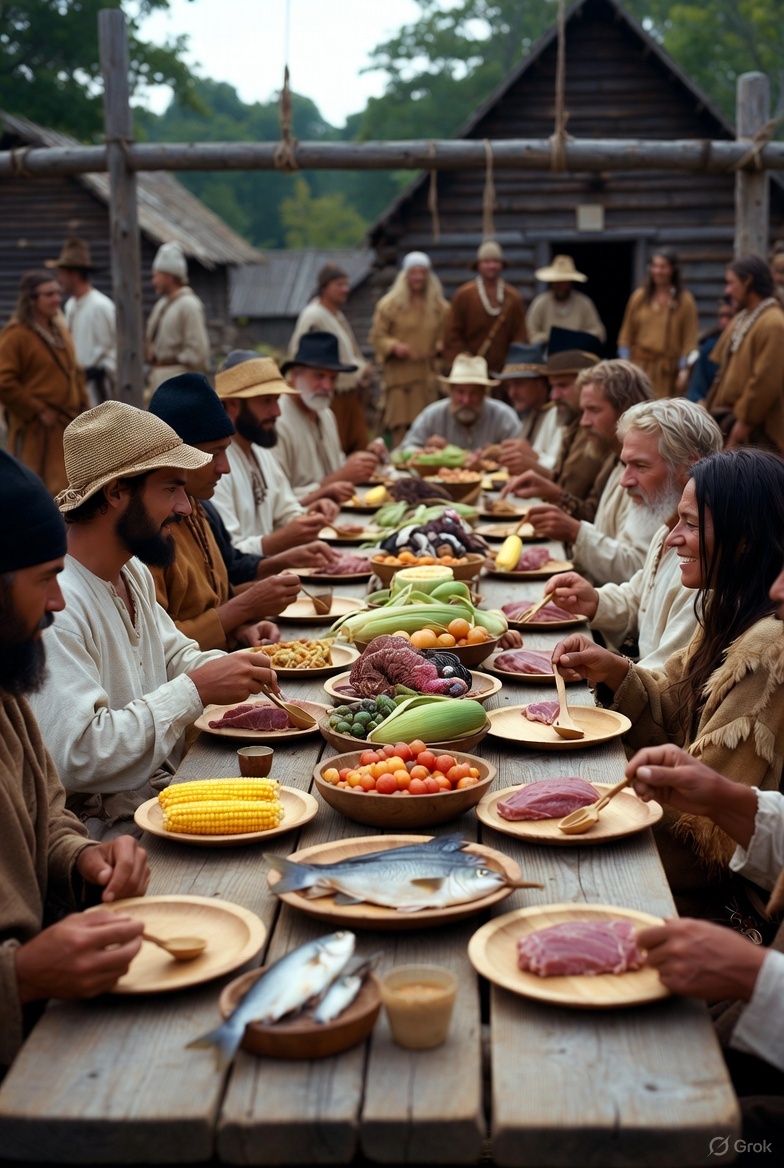
In the crisp autumn of 1621, amid the whispering pines and salt-kissed shores of what is now Plymouth, Massachusetts, an unlikely gathering unfolded. It wasn’t the sanitized, turkey-laden tableau of school pageants or holiday cards, no pilgrims in buckled hats serving pie to smiling Native Americans. Instead, it was a raw, pragmatic moment of cross-cultural cooperation: starving English settlers and resilient Wampanoag warriors sharing a bountiful harvest after months of hardship and mutual aid. This event, drawn from firsthand accounts, remains the authentic heart of Thanksgiving. A tale of survival, diplomacy, and gratitude that deserves retelling in all its gritty glory.
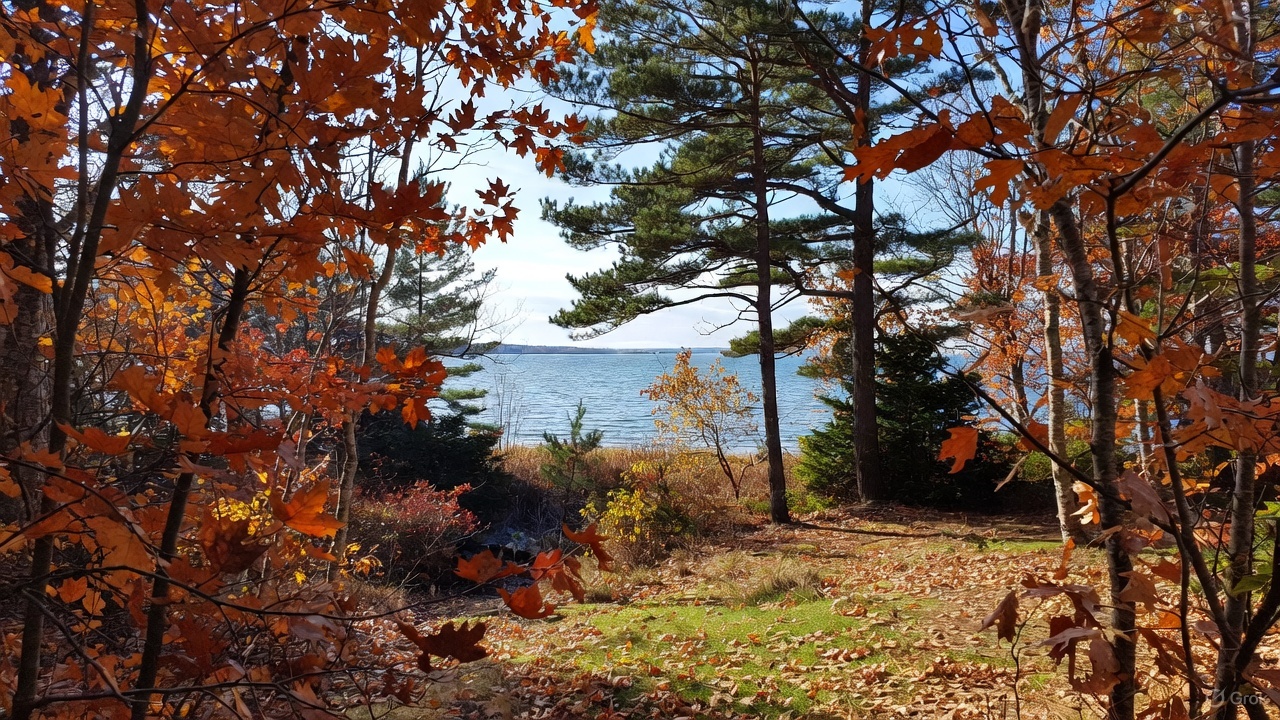
The story begins in the spring of 1621, when the world was still reeling from invisible plagues and shifting powers. The Pilgrims, a group of religious separatists who had fled England aboard the Mayflower, were in dire straits. Half their number, about 50 of the original 102, had perished during that brutal first winter, succumbing to scurvy, pneumonia, and the unforgiving New England cold. Their crops had failed, their supplies dwindled, and they lacked the knowledge to thrive in this alien landscape.
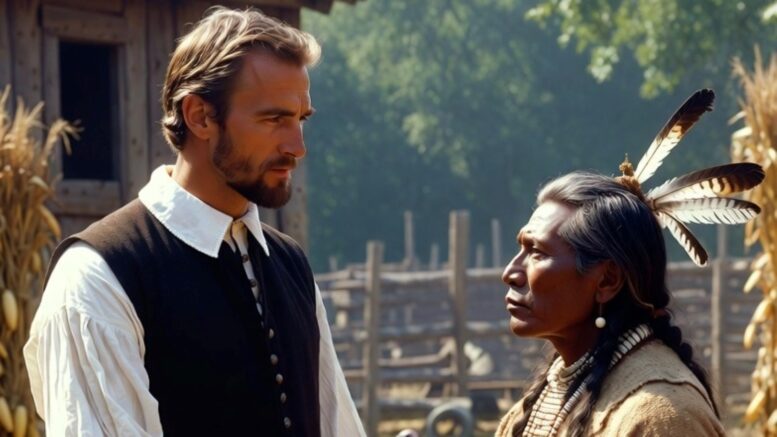
Enter Ousamequin, better known as Massasoit, the sachem (leader) of the Wampanoag people. His tribe had endured their own catastrophe: devastating epidemics from 1616 to 1619, likely leptospirosis or smallpox introduced by earlier European traders, which wiped out up to 90% of their population in some villages. This loss had weakened them against rivals like the Narragansett tribe, creating a strategic opening for alliance. In a calculated move of diplomacy, Massasoit approached the Pilgrims and signed a peace-and-mutual-defense treaty. It was no act of pure altruism; both sides needed each other. The Wampanoag gained potential allies in regional conflicts, while the Pilgrims received vital protection and know-how. As primary sources like Edward Winslow’s Mourt’s Relation and William Bradford’s Of Plymouth Plantation attest, this pact was the foundation of what followed.
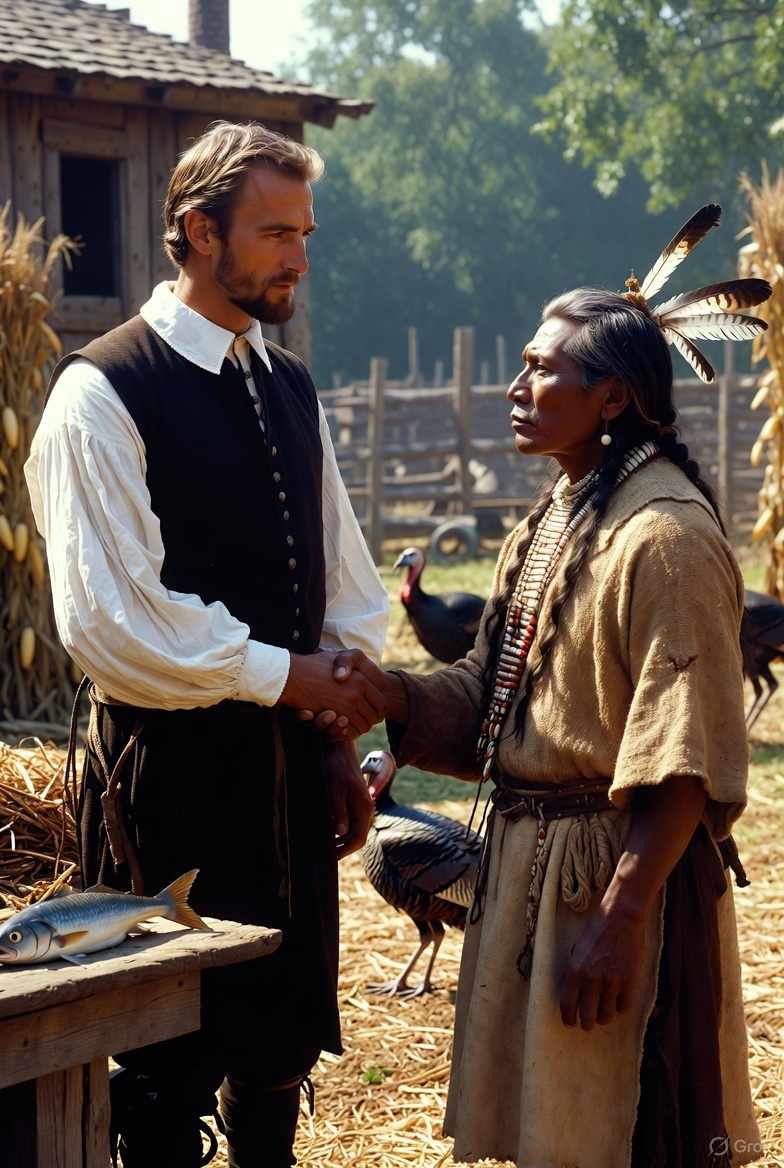
At the center of this bridge-building was Tisquantum, or Squanto, a Patuxet man whose life read like an epic of tragedy and resilience. Kidnapped by English explorers in 1614, he was sold into slavery in Spain, escaped to England, learned the language, and eventually returned home in 1619, only to discover his entire village decimated by disease. Now aligned with the Wampanoag, Squanto stepped forward as an interpreter and guide, his fluency in English making him indispensable.
Squanto’s teachings were practical miracles. He showed the colonists how to plant corn by burying fish, likely menhaden or herring, as fertilizer, a time-tested Indigenous method that enriched the sandy soil. He mapped out fishing grounds, identified edible wild plants, and navigated the delicate web of tribal alliances. Without this knowledge transfer, the Plymouth colony might have collapsed entirely. It was Indigenous expertise, freely shared, that turned the tide, a powerful reminder of how collaboration can defy the odds.
By fall, the fruits of this partnership were literal. The Pilgrims’ harvest was a success: ears of corn stacked high, fish aplenty, and wild fowl filling the skies. To celebrate, Governor William Bradford organized a feast, dispatching four men to hunt. They returned with enough birds, ducks, geese, and perhaps the now-iconic wild turkeys, to sustain the group for days. The menu was eclectic: corn, fish, shellfish, and whatever the land provided.
Then came the unexpected guests. The sound of the colonists’ celebratory gunfire, part of their military drills and games, drew Massasoit and about 90 Wampanoag men to the settlement. Far from an intrusion, they were welcomed warmly. The visitors contributed five deer, elevating the event into a three-day extravaganza of eating, recreation, and strengthened bonds. Around 52 colonists, including women and children, mingled with the Wampanoag warriors, and possibly their families, who had been aiding in nearby fields. It was a diplomatic triumph, blending English harvest traditions with Native American customs of communal feasting.
Edward Winslow captured the joy in a letter home: “Our harvest being gotten in, our governor sent four men on fowling, that so we might after a special manner rejoice together, after we had gathered the fruits of our labors; they four in one day killed as much fowl, as with a little help beside, served the Company almost a week, at which time amongst other Recreations, we exercised our Arms, many of the Indians coming amongst us, and amongst the rest their greatest king Massasoit, with some ninety men, whom for three days we entertained and feasted, and they went out and killed five Deer, which they brought to the Plantation and bestowed on our Governor, and upon the Captain and others. And although it be not always so plentiful, as it was at this time with us, yet by the goodness of God, we are so far from want, that we often wish you partakers of our plenty.
“William Bradford, in his journal, echoed this sense of abundance: wild turkeys, venison, fish, corn, and “great store of wild fowl,” with the Indigenous guests turning a simple gathering into a shared victory.
This 1621 feast wasn’t dubbed “Thanksgiving” at the time, that came centuries later, formalized by presidents like George Washington and Abraham Lincoln. But its essence endures: two peoples, scarred by loss, choosing alliance over enmity, knowledge over ignorance, and plenty over scarcity. In an era of division, it’s a beacon of what’s possible when we extend a hand, or a deer haunch, across cultural divides.
As we gather around our own tables today, let’s honor this kernel of history not with myths, but with truth. It’s a story that inspires us to build bridges, express thanks, and remember that survival often hinges on the generosity of strangers. After all, in the words of Winslow, may we all be “partakers of our plenty.”