I Bleed Red, White, and Blue
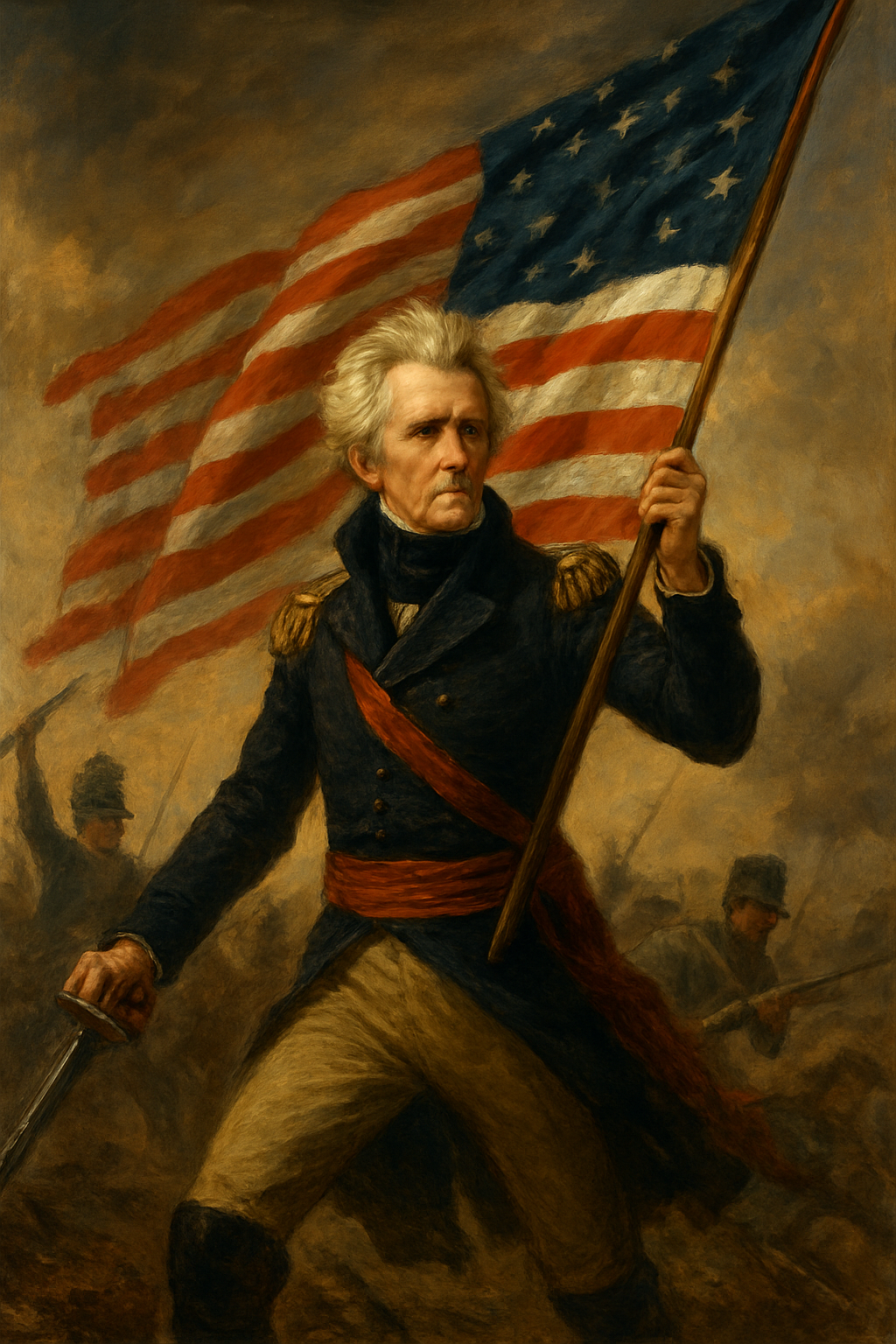
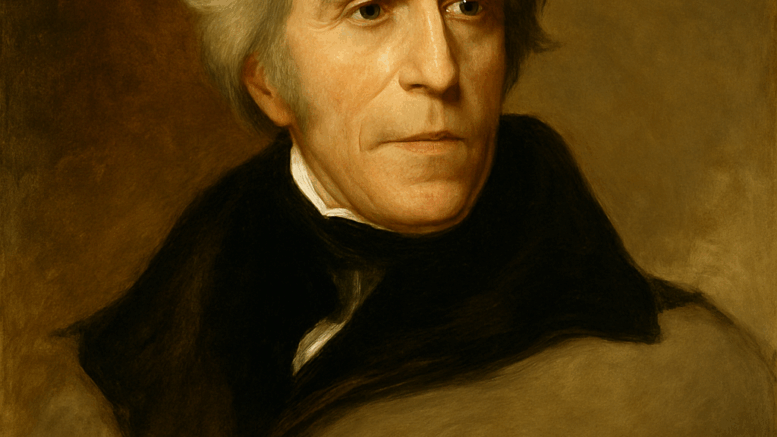
Few figures in American history combine raw physical courage, volcanic willpower, and transformative political power quite like Andrew Jackson. Soldier, duelist, populist tribune, and seventh President of the United States, Jackson was a man forged in the crucible of the frontier and tempered by war. Love him or loathe him, no honest accounting of the American story can deny that he permanently altered the trajectory of the republic. He was, in the truest sense, a force of nature wearing buckskin and a scowl.
The Making of a Titan
Born in 1767 in the Waxhaws region between the Carolinas, Jackson came into the world with nothing but grit. Orphaned by the Revolution (his mother and two brothers died in the war), he was captured by the British at age thirteen, slashed across the face and hand with a saber for refusing to polish a redcoat’s boots. He carried those scars, and that hatred of aristocracy, for the rest of his life.
By his twenties he was a self-taught lawyer, Indian fighter, and Tennessee planter. He killed a man in a duel in 1806 (Charles Dickinson, an expert shot who put a bullet within an inch of Jackson’s heart; Jackson calmly took aim and drilled Dickinson through the chest anyway). He survived malaria, dysentery, abscesses, lead lodged in his body from multiple gunfights, and still outlived most of his enemies. Contemporaries described him as a walking hurricane.
The Hero of New Orleans
On January 8, 1815, Jackson achieved immortality. Outnumbered and facing the finest army Britain could send after defeating Napoleon, he held a muddy rampart south of New Orleans with a ragtag force of frontiersmen, Choctaw warriors, Creole militiamen, and even Jean Lafitte’s pirates. In less than thirty minutes, the redcoats were shredded: over 2,000 British casualties to fewer than a dozen Americans. The battle was technically fought after the war ended, but news of the victory exploded across a battered young nation like cannon fire. Jackson became the living embodiment of American defiance.
The Birth of Jacksonian Democracy
Jackson did not just fight battles; he demolished political tradition. The election of 1828 was the first true populist uprising in American history. “Old Hickory” ran as the champion of the common man against the patrician John Quincy Adams and the “corrupt bargain” of 1824. Farmers, mechanics, and frontiersmen who had never voted before turned out in droves. Voter turnout doubled. Spoils system, mass rallies, and mud-slinging campaigns. Modern American politics was born in the furnace of Jackson’s presidency.
He paid the national debt down to zero for the only time in American history (1835), an achievement so staggering that both parties today claim they want to repeat it but never do. He faced down South Carolina’s nullification crisis in 1832–33, threatening to hang John C. Calhoun from the nearest tree if the state defied federal law, while simultaneously offering a compromise tariff that let the South save face. Force and finesse in the same hand.
The Bank War and the Rise of the Presidency
Jackson’s destruction of the Second Bank of the United States remains one of the most audacious acts ever undertaken by an American president. Viewing the Bank as a monstrous privileged monopoly that enriched Northeastern elites at the expense of farmers and workers, he vetoed its recharter in 1832 with a message so blistering it still scorches the page. When the Senate censured him, he treated the rebuke like a badge of honor. He withdrew federal deposits and killed the Bank by executive action alone, vastly expanding the power of the presidency and proving that one determined man in the White House could break the most powerful financial institution in the country.
The Man Himself
He was coarse, profane, loyal to a fault, and terrifying when crossed. He fought at least thirteen duels or near-duels. He blamed his political enemies for his wife Rachel’s death, and hounding her to the grave. He adopted numerous children. He was the humblest of men, and he spoke for the people.
The Enduring Impact
Jackson left office in 1837 wildly popular, riding a wave of adoration that carried his protégé Martin Van Buren into the White House. The Democratic Party he midwifed still bears his stamp: populist, suspicious of elites, devoted to executive power. The twenty-dollar bill still carries his face, an irony that would have made him grin.
America became a different country because Andrew Jackson lived: louder, broader, more democratic, more violent, more egalitarian in rhetoric and ruthless in deed. He embodied the frontier spirit; unpolished, unstoppable, and unafraid to break whatever stood in his way, whether British army, national bank, or ancient tribal homelands.
Andrew Jackson did not ask America to be perfect. He demanded it be fearless. And for one volcanic stretch of the republic’s youth, it was.